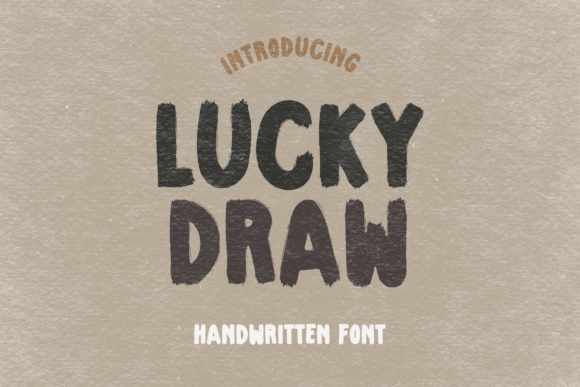
Lucky Draw: A Creative Font for Standout Design
Lucky Draw is a unique and charming drybrush display font that brings a hand-drawn, sketchy aesthetic to any design project. Its playful yet professional look makes it ideal for a wide range of applications, from branding and marketing materials to creative content and personal projects. This font isn’t just about style—it’s about impact. Whether you're working on a website, a poster, or a social media graphic, Lucky Draw can elevate your visuals and help your message stand out in a crowded digital landscape.
Why Lucky Draw Stands Out
The essence of Lucky Draw lies in its sketchy, organic feel. Unlike traditional sans-serif or serif fonts, Lucky Draw mimics the texture and irregularity of a drybrush stroke, giving text a sense of movement and personality. This characteristic makes it particularly effective for creative and personalized projects where visual storytelling is key.
Its versatility is another major strength. While it may not be suitable for every typographic context—especially those requiring high readability—Lucky Draw shines when used strategically. It’s especially well-suited for headings, titles, and call-to-action buttons, where its distinctive style can draw attention without overwhelming the reader.
Where Lucky Draw Fits in Your Workflow
Lucky Draw can be integrated into your workflow at various stages, depending on your goals and the nature of your project. Here are some practical use cases:
- Before a Project: Use Lucky Draw to create mockups, concept sketches, or mood boards. Its artistic nature helps set the tone and direction for your design before you dive into execution.
- During a Project: Apply it to headlines, taglines, or key messages to add visual interest and reinforce your brand identity. It works well with other fonts to create a balanced hierarchy.
- After a Project: Incorporate Lucky Draw into final assets like brochures, social media posts, or promotional materials. It adds a touch of creativity and uniqueness that can differentiate your work from competitors.
By using Lucky Draw at these different points in your workflow, you can maintain consistency while also introducing variety and flair to your designs.
How Lucky Draw Works with Other Tools
Lucky Draw is designed to be compatible with most design software and platforms. Whether you’re using Adobe Illustrator, Photoshop, Canva, Figma, or even HTML/CSS, this font integrates smoothly into your existing tools. Here’s how it interacts with common design workflows:
Adobe Suite: Lucky Draw supports OpenType features, allowing for advanced typography options like ligatures and alternate characters. This makes it easy to customize and adapt to different design needs.
Canva & Figma: These platforms offer built-in font libraries, and Lucky Draw is often available as a downloadable font or through third-party extensions. It works seamlessly with their drag-and-drop interface, making it accessible for designers of all skill levels.
HTML/CSS: For web developers, Lucky Draw can be embedded via @font-face or linked from a CDN. It’s important to test rendering across different browsers and devices to ensure consistent display.
By understanding how Lucky Draw interacts with your preferred tools, you can streamline your workflow and maximize its potential in both print and digital formats.
Practical Tips for Using Lucky Draw
To get the most out of Lucky Draw, consider these implementation tips:
- Use It Sparingly: Because of its bold and stylized appearance, it's best used in moderation. Overuse can lead to visual clutter and reduce readability.
- Pair with Readable Fonts: Balance Lucky Draw with a clean, legible font for body text. This ensures your message remains clear and professional while still maintaining a creative edge.
- Test Across Platforms: Always preview your designs on different devices and screen sizes to ensure the font displays correctly and maintains its intended effect.
- Consider Branding: If you're using Lucky Draw for branding, make sure it aligns with your overall brand voice and visual identity. Consistency is key to building recognition.
- Experiment with Sizes: Larger sizes tend to emphasize the sketchy texture of Lucky Draw, making it perfect for headers and logos. Smaller sizes may lose its impact, so adjust accordingly.
These practical steps will help you integrate Lucky Draw into your design process effectively and maintain a cohesive visual language across your projects.
Real-World Applications and Examples
Lucky Draw is more than just a decorative font—it’s a tool that can enhance the user experience and strengthen your message. Here are a few real-world scenarios where it can be applied:
Marketing Materials: Use Lucky Draw for event posters, banners, or promotional flyers. Its eye-catching style can attract attention and convey excitement quickly.
Branding: Incorporate it into logo designs, business cards, or packaging. It adds a unique character that can help your brand stand out in a competitive market.
Education: Teachers and educators can use Lucky Draw in lesson plans, presentations, or interactive learning materials to engage students and make content more visually appealing.
Personal Projects: From DIY crafts to personal blogs, Lucky Draw can add a creative touch to your own work, helping you express your personality and ideas more vividly.
By applying Lucky Draw to these varied contexts, you can see how it fits naturally into both professional and personal workflows, enhancing the visual impact of your work without compromising clarity or functionality.
Conclusion
Lucky Draw is more than just a font—it’s a creative asset that can transform your design projects. Its unique, sketchy style offers a fresh way to communicate your message and stand out in a sea of similar content. By understanding how to integrate it into your workflow, you can unlock new possibilities and elevate your visual storytelling.